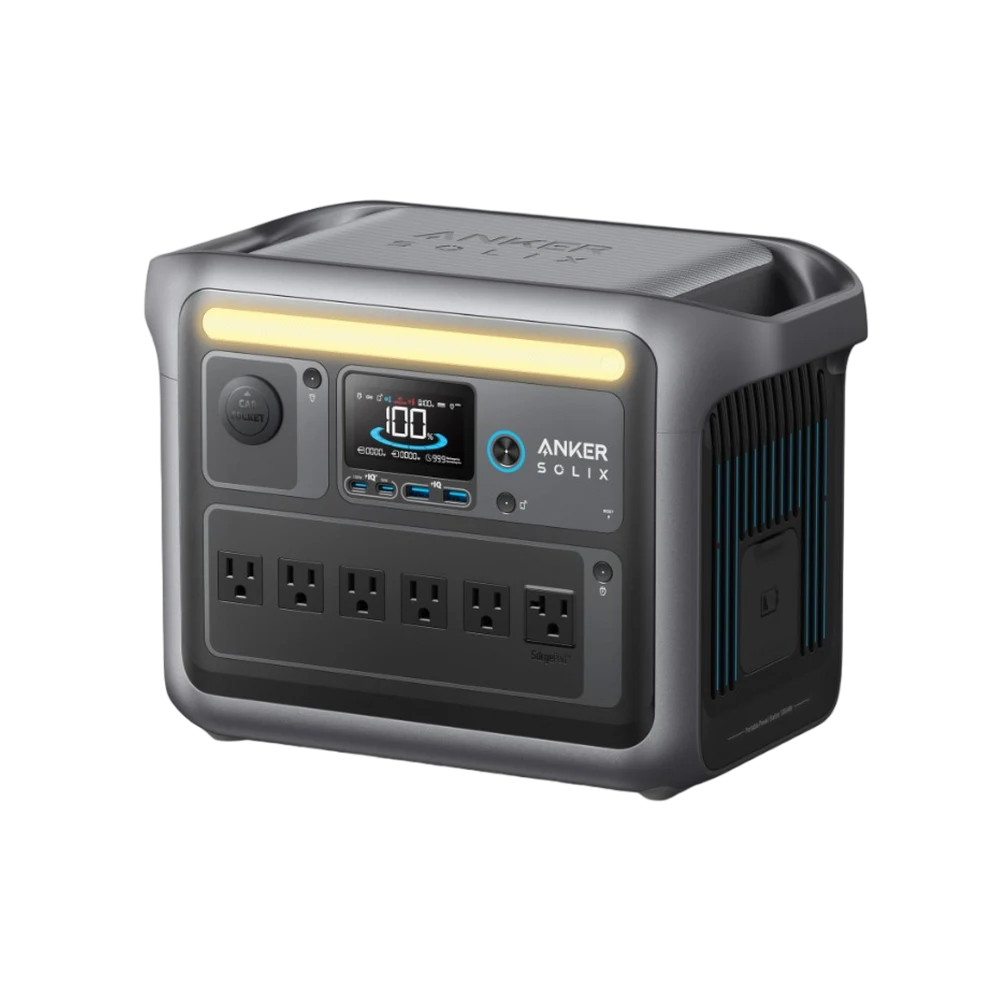
This analysis concerns the original 1,056 Wh C1000, not C1000 Gen 2. Use its 1,800 W continuous rating for normal load planning, not a special-mode headline.
Manufacturer information informs the product details; the buying analysis is our own. This is not a hands-on test.The details at a glance
- Model scope
- Original C1000
- Capacity
- 1,056 Wh
- Continuous AC output
- 1,800 W
Resolve the generation before reading the offer
The official page presents the original C1000 alongside a newer generation option. That makes precise product identity important. A search result, review headline and retailer selector may not all refer to the same unit. Check the selected model and specification together before assuming that a charging claim from one version belongs to the other.
For the original C1000, the manufacturer lists 1,056 watt-hours and 1,800 watts continuous AC output. Those figures define different parts of the buying brief. A station can support an appliance’s operating load yet have insufficient energy for your required duration. Keep a normal-output scenario separate from a long-runtime scenario.
Do not treat an enhanced-output feature as an ordinary continuous rating for all equipment. The manufacturer describes restrictions for precision instruments and loads with strict voltage requirements in its special-mode guidance. A cautious plan begins with the documented normal rating and the appliance’s needs, not the most eye-catching number in the promotional copy.
Ports deserve a device-by-device check
Count the actual devices you expect to use simultaneously. A selection of AC and USB outputs can simplify charging, but each port has its own supported arrangement. Match a laptop’s requirement to the relevant USB-C output and cable rather than assuming that any USB-C connector supplies the same power. Connector shape is not a complete specification.
Using a supported direct DC or USB connection may avoid an unnecessary AC adapter stage, but do not invent a universal efficiency improvement. The equipment must be compatible and the cable appropriate. Check the exact port limits and shared-output conditions in current instructions. Convenience is only useful when the connection genuinely serves the device.
Regional sockets and packages vary. The US product shown here is not a promise about an Italian, French or UK offer. When a local promotion is added, verify the local model and accessories separately. An international product photograph can support a general analysis without establishing the electrical version you should purchase.
Solar input is a compatibility envelope
The manufacturer specifies solar input limits and a supported connector arrangement for this model. The useful lesson is to compare voltage, current and connection requirements together, not only panel watts. A panel with an appealing wattage can still be unsuitable if its electrical characteristics fall outside the permitted arrangement.
Read the exact limits and approved combinations in the manual before connecting equipment. Avoid copying a series or parallel diagram from an unrelated station. Panel electrical behaviour and input limits need to be assessed properly, including relevant operating conditions. If the compatibility is unclear, get qualified guidance rather than trial-and-error connecting.
Available sunshine is separate from compatibility. A correctly connected panel can produce less energy under cloud, shade or an unsuitable angle. Choose a placement and backup charging plan that reflect your trip. A headline recharge time is not a guarantee for a campsite shaded by trees or a winter day with limited useful light.
Keep the backup brief modest and testable
If the goal is a router, lights and laptop during a short interruption, write the assumed power and duration for each. Test the real equipment before an outage, but do not create unsafe wiring or rely on an unsupported pass-through arrangement. A measured personal scenario is more useful than a promise that a station powers an entire home.
Check storage and maintenance guidance so the unit remains ready. A battery bought for emergencies still needs attention between them. Keep outputs and charging settings consistent with the instructions, and choose a dry, suitable location with appropriate ventilation during use. A station forgotten in an unsuitable cupboard is not a complete preparedness plan.
The original C1000 is worth considering when its capacity, ports and continuous output suit a clearly defined load. Resolve the generation, validate the connections and compare the entire new-product offer. That is a stronger purchase method than blending specifications from original and newer models into a product that does not actually exist.